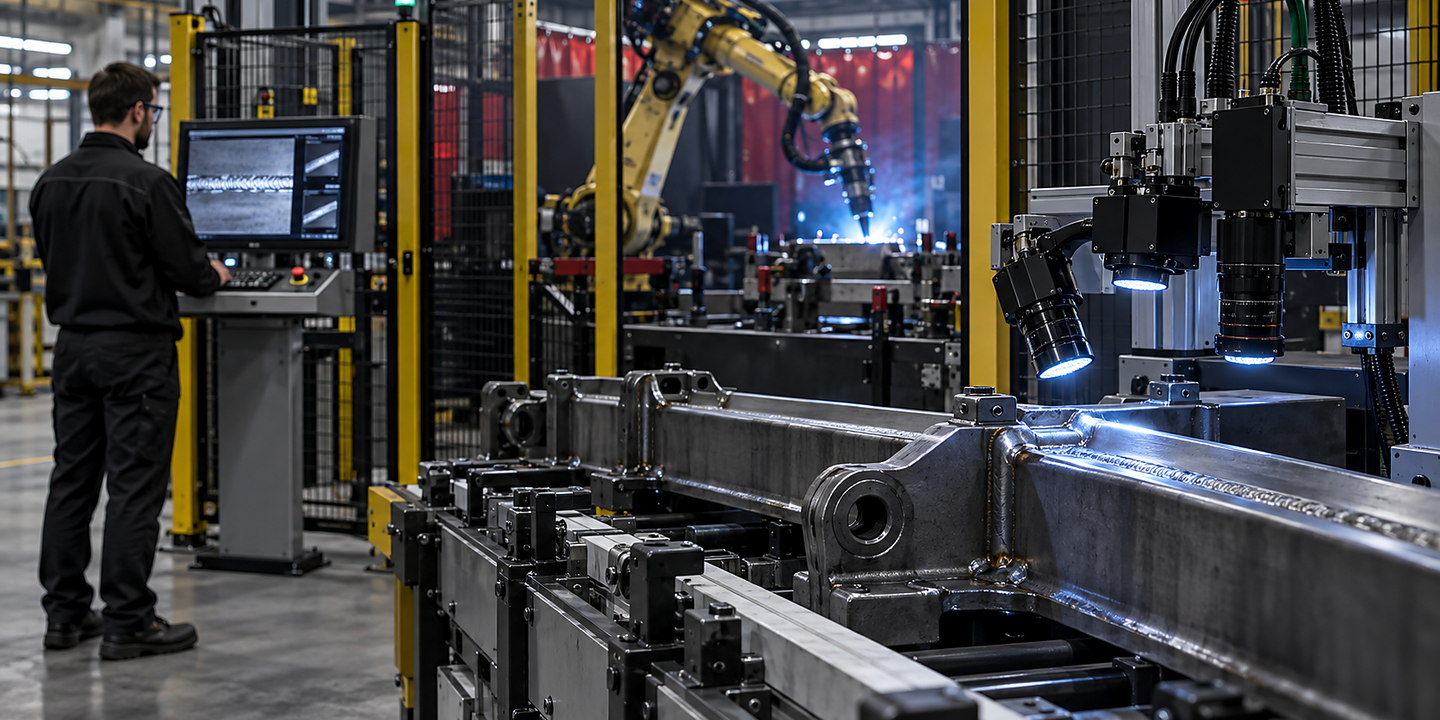
Plan mechanical, electrical, control, data, safety and operator interfaces for visible weld feature inspection.
In brief
Successful visible weld feature inspection must work with your existing line, people, production data and safeguards—not as an isolated machine.
For retrofit or multi-variant checks involving visible weld-feature inspection, define every physical connection, signal, responsibility, check and fallback before installation.
On the production floor
Connect equipment, controls and people into one reliable process — Visible Weld Feature Inspection
Plan visible weld feature inspection around representative good, bad and marginal samples, line presentation, lighting, reject handling and challenge criteria. Discuss an optical feasibility trial with Oxford Vision Systems. Your integration review should connect part presentation and production speed, optics, lighting and environmental conditions and the people who run the process.
Six areas to coordinate for visible weld feature inspection
Mechanical
Confirm datums, loads, envelopes, transfers, guarding and service access around the proposed view of the weld feature. Record how assembly position and access can vary, so mechanical arrangements can be checked against the optical trial conditions.
Electrical
For Visible Weld Feature Inspection, list the supplies, isolation, protective devices, panels and cable routes required by the proposed installation.
Controls
Use the specification checklist to agree operating modes, handshakes, permissives, recipes, faults and recovery. Define how each inspection result relates to the assembly and the required line response; confirm the actual signals before assuming compatibility.
Safety
Review risk controls, stop behaviour, access, reset and the checks needed around optics, lighting and environmental conditions.
Data
Define the required identifiers, timestamps, inspection results, retention period and recovery method. Agree which records are needed to review a challenged sample or unexpected result, and who owns the connection to existing production data.
Your team
Plan normal operation, replenishment, clearance, cleaning, maintenance and training for the people using the line. Assign responsibility for recipe changes, challenge samples and restart checks, with operating information that matches the agreed inspection scope.
How the work comes together
Plan fault recovery for in-line inspection using visible weld-feature inspection as carefully as normal running
For Visible Weld Feature Inspection, your team can review each stage before the complete installation is put into routine use.
01
Define the Visible Decision and Collect Representative Samples
Share representative good, bad and marginal samples, including the normal range for visible defect or measurement definition for visible weld-feature inspection and the difficult good, bad and marginal sample range cases.
02
Prove Contrast, Presentation and Timing in an Optical Trial
Compare suitable methods and use focused trials to show how each option performs against part presentation and production speed.
03
Integrate Cameras, Controls, Reject Handling and Recipes
Connect the equipment to your line, services and controls while resolving optics, lighting and environmental conditions for day-to-day operation.
04
Challenge Marginal Cases and Document Agreed Results
Confirm recipe, reject and line-control interfaces, then complete and record false-accept, false-reject and challenge criteria before your operating team takes over.
For your application: check part presentation and production speed, optics, lighting and environmental conditions, recipe, reject and line-control interfaces, and false-accept, false-reject and challenge criteria as part of the complete line trial.
Important limits
Line connections can change the approach for Visible Weld Feature Inspection
A camera can only assess a property made visible and repeatable by the inspection setup.
Sample diversity and marginal cases determine how meaningful a feasibility result is.
Visual inspection does not replace hidden, destructive, functional or statutory tests.