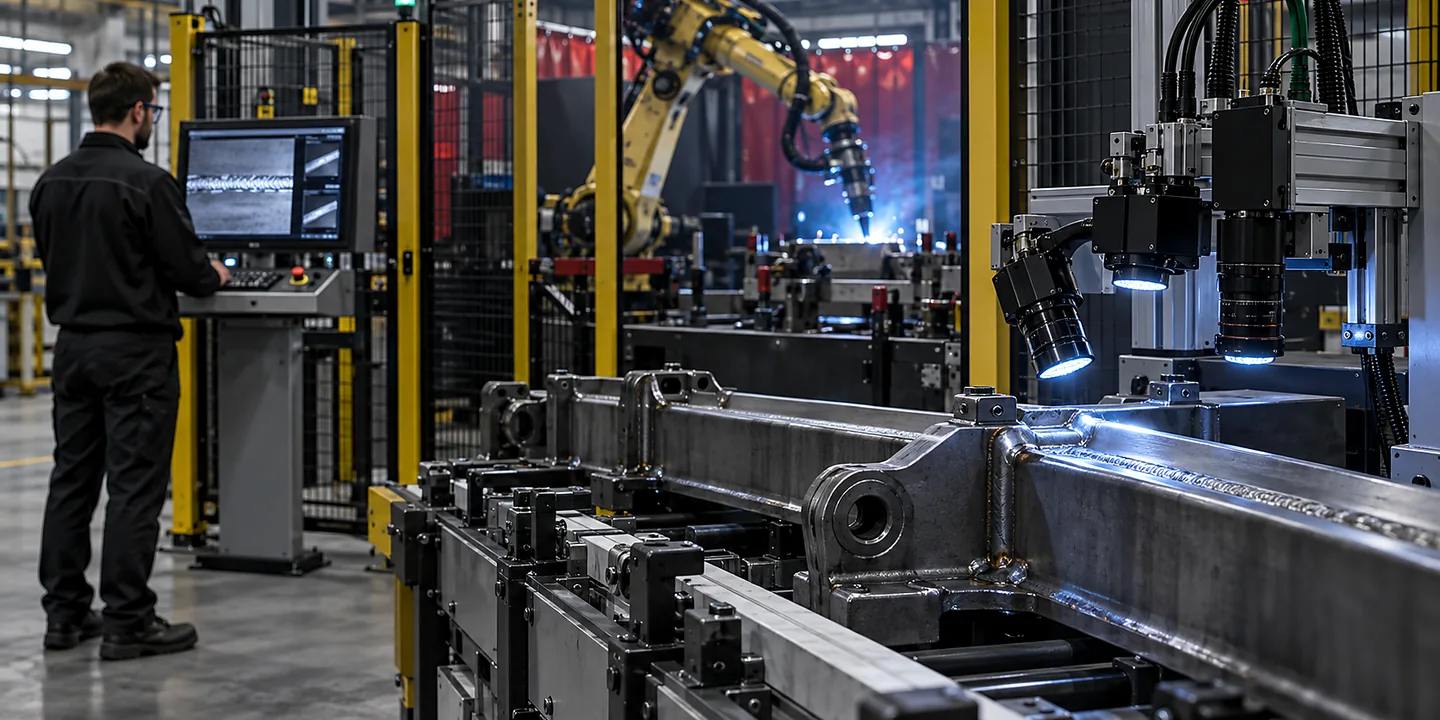
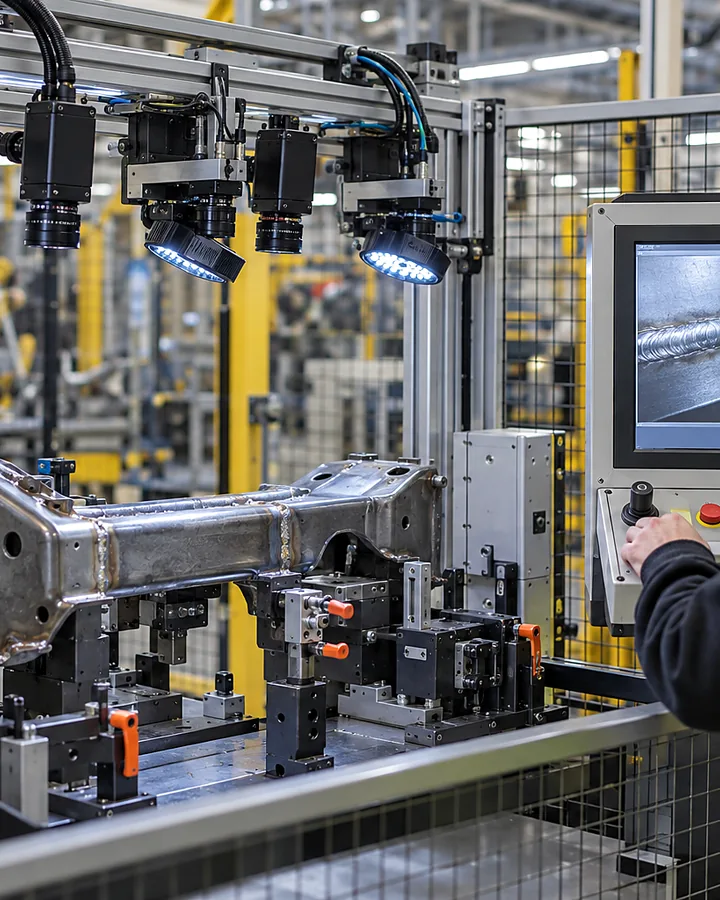
Plan visible weld feature inspection around representative good, bad and marginal samples, line presentation, lighting, reject handling and challenge criteria. Discuss an optical feasibility trial with Oxford Vision Systems.
Speak directly with Oxford Vision Systems about visible weld-feature inspection.
In brief
Choose visible weld feature inspection by defining visible defect or measurement definition for visible weld-feature inspection, good, bad and marginal sample range, optics, lighting and environmental conditions, and false-accept, false-reject and challenge criteria, then prove the preferred method using representative good, bad and marginal samples before the final system is specified.
Your final visible weld feature inspection scope must also account for recipe, reject and line-control interfaces, false-accept, false-reject and challenge criteria, current regulations and the conditions at your site.
Quick answer
Which weld features can cameras inspect, and what requires another test method?
For visible weld feature inspection, define visible defect or measurement definition for visible weld-feature inspection and collect good, bad and marginal sample range before choosing cameras. An optical trial should prove contrast, presentation and timing, followed by agreed checks for false-accept, false-reject and challenge criteria.
Six useful questions
Describe what you need from visible weld feature inspection before choosing a solution
For in-line inspection using visible weld-feature inspection, share the normal condition, realistic range and difficult cases the finished system must handle.
Question 1
Visible Defect or Measurement Definition for Visible Weld-Feature Inspection
Mark the visible weld feature on a drawing or sample image. State the decision you need, the acceptable limits and any exceptions; keep requirements for properties that are not visible separate from this optical enquiry.
Question 2
Good, Bad and Marginal Sample Range
Provide samples labelled good, bad and marginal, with the reason for each label. Include normal variation as well as difficult examples, and identify any sample whose expected result has not yet been agreed.
Question 3
Part Presentation and Production Speed
Describe where the assembly is presented, how its position can vary and the production speeds to be considered. Include the time available to view the weld feature and the changes needed between part variants.
Question 4
Optics, Lighting and Environmental Conditions
Describe access to the weld feature, existing lighting and conditions that change its appearance. Include reflective or dirty examples where they occur in production, so the optical trial can test contrast under representative conditions.
Question 5
Recipe, Reject and Line-Control Interfaces
List the required recipes, line signals and response to each inspection result. Identify who controls part handling, rejection and fault recovery, and record interface details that still need agreement.
Question 6
False-Accept, False-Reject and Challenge Criteria
Agree how the trial will distinguish a bad sample accepted from a good sample rejected. Set the sample range, repetitions and acceptable results before testing, and keep marginal or unresolved decisions visible in the record.
Applications
Two useful starting points for visible weld feature inspection
The right choice changes with visible defect or measurement definition for visible weld-feature inspection, good, bad and marginal sample range, your line layout and required results.
Your route from an initial enquiry to a working solution
You can review decisions about recipe, reject and line-control interfaces and false-accept, false-reject and challenge criteria at each stage.
01
Define the Visible Decision and Collect Representative Samples
Share representative good, bad and marginal samples, including the normal range for visible defect or measurement definition for visible weld-feature inspection and the difficult good, bad and marginal sample range cases.
02
Prove Contrast, Presentation and Timing in an Optical Trial
Compare suitable methods and use focused trials to show how each option performs against part presentation and production speed.
03
Integrate Cameras, Controls, Reject Handling and Recipes
Connect the equipment to your line, services and controls while resolving optics, lighting and environmental conditions for day-to-day operation.
04
Challenge Marginal Cases and Document Agreed Results
Confirm recipe, reject and line-control interfaces, then complete and record false-accept, false-reject and challenge criteria before your operating team takes over.
Important limits
Know what needs a separate check
A camera can only assess a property made visible and repeatable by the inspection setup.
Sample diversity and marginal cases determine how meaningful a feasibility result is.
Visual inspection does not replace hidden, destructive, functional or statutory tests.
Your final solution for visible weld-feature inspection must reflect the law, current standards and site-specific risks that apply to your installation.